Thursday, March 15, 2018

Emotional Appeals


These are based on the emotions of people and since humans are generally emotional, these kinds of appeals directly touch the hearts of public especially in the case of FMCG and children goods. But now such kinds of appeals are also being used by Insurance companies, hospitals and so on. Emotional appeals relate to the customers’ social and/or psychological needs for purchasing a product or service.
These appeals can be classified into two groups, namely, Positive Emotional Appeals and Negative Emotional Appeals.
Positive Emotional Appeals - The various types of positive emotional appeals being used by the advertisers are love, joy,humor, prestige, affection, security, comfort, self-esteem, achievement, health, sex and so on. Generally the baby products’ ads use love/affection appeal. The most common example relating to this kind of appeal is the Johnson’s baby products’ advertisements.
Figure: Click on the link below to see Johnson’s Ad showing Parental Love


An advertisement of Cadbury Silk chocolate that used joy appeal and demonstrated a girl and a boy enjoying the Cadbury’s chocolate in a joyous mood.

Figure: Click on the link below to see ‘Joy Appeal’ used in Cadbury Ad.


Figure: Click on the link below to see the effective use of‘Security Appeal’.


In an ad shown of Durafirm, the Durafirm mattresses had used comfort appeal when it stated in its copy designed especially to offer orthopedically correct posture and comfort to back and spine.
Figure: Click on the link below to see ‘Comfort Appeal’ in the ad of Durafirm Mattresses


Many health drinks use health appeal, where the mother is shown to be quite concerned with the health and growth of her growing child.
Figure:Click on the link below to see ‘Health Appeal’ in Complan Ad.


The figure below uses health appeal when it promotes the product as one that fights diabetes and excess weight; manages stress and blood pressure; and relieves joint pain and spondylitis.

Figure: Advertisement based on Health Appeal
Source: Newspaper Clipping

Similarly, advertisements related to locks, door handles, cement etc. use security appeal while prestige appeal is generally associated with branded products example: Raymonds – ‘A Complete Man’, indicates that a person who wears Raymond’s suitings belongs to a different class of men.

Figure: Click on the link below to see Raymond ad depicting – ‘A Complete Man’where a Prestige Appeal.

Many advertisers have also used humour very effectively. Many products have been promoted using this appeal and humour generally affects audience very quickly and attention can be easily sought. This is an interesting way to reach to the audience in an entertaining manner. The ad promoting the mint candy ‘Mentos’ with the tagline ‘Dimag ki Batti jala De’, is an example where humour appeal has been effectively used.
Figure:Click on the link below to see Mentos ad using ‘Humor Appeal’

Marketers to market products such as condoms, lingerie, deodrants, perfumes and soaps have also used sex appeal. The Axe ad is a classic example of sex appeal wherein the girls get attracted towards a boy who has used Axe deodorant.
Figure: Click on the link below to see the ‘Axe Deodorant’ad using ‘Sex Appeal’ in promoting Deodorants

This kind of appeal should be used in a very careful and in a subtle manner because if not used carefully; these appeals can make the ads vulgar overshadowing the ad message that causes poor product recall. This means that the target audience might be able to recall the sexual visuals but might not be able to recall the product for which it has been used. Rampant useof this appeal in the product categories, which have nothing to do with this kind of appeal, is not justified and is an ethical issue.

Value Addition 5: Pause and Think
Emotional Appeal
Watch a few ads of body lotions of different brands.
Have the advertisers used sex appeal in the ad?
Do you think the use of ‘Sex Appeal’ in the advertisement of a body lotion is justified? Give reasons.

Negative Emotional Appeal - The negative emotional appeal showcases the loss that a person might incur in case he does not follow the instructions given by the advertiser. Fear Appeal is the most important type of negative emotion appeal thathas been immensely used by the advertisers to get the desired behavior from the consumers by instilling fear or anxiety.
Fear Appeal: This appeal has been very extensively used to instill fear in the minds of the consumers for not using a particular product. It has been used in messages of wide variety of products and even in social messages to foster a particular behavior pattern amongst the general public. The appeals have been used in ads related to Insurance policies, wearing of helmets, save water, and smoking. In ads of products like cold creams, the ads indicate that if the product is not used, it can lead to dry skin in winters. In case of tooth-paste, the ad shows that if it is not used, it can lead to either tooth ache or tooth decay.

Figure: Click below to see a Colgate ad showing fear appeal.

Value Addition 6: Video
Pepsodent Ad
Click on the link below to watch a Pepsodent ad that was designed on a fear appeal of damaging the teeth if not brushed regularly with Pepsodent toothpaste

Fear appeals are much more effective and bring about desired change immediately as compared to positive emotional appeals. Moreover, fear appeals are seldom composed of only negative element and the message closes down on a positive note if one complies with the message. For example, in the figure below, the fear appeal is used by including a demon’s shadow in the picture that demonstrates that you are at risk if not protected. However, besides including the fear factor, the ad states that protection is possible and suggests State Bank of India’s 8 rules of safe and secure Internet banking.
Figure : Ad based on Fear Appeal

Value Addition 7: Activity
Emotional Appeal
Think of three products or product categories for which the use of emotional appeal is most suitable. Justify your choice by giving reasons.


Feature Appeal


1.      Feature Appeal 
Ads using this type of appeal generally focus on the product attributes and distinct features which help the buyers to make a rational purchase decision based on such appeal. The feature appeal is generally used by manufacturers of electronics, automobiles, and similar other product categories which are technical products and high involvement products. For example, in the adof Volvo car, the advertiser used feature appeal by portraying the illumination capability of the car’s headlights and relates it to Diwali lighting.
Figure : Click on the link below to see Volvo ad highlighting its lighting feature.

Figure : Palmolive ad showing the feature of the product that develops and maintains the right complexion


Value Addition 1: Activity
Feature Appeal
Collect any two Ads that have used rational appeals based on features of a product. Analyze the ads and identify the particular features that have been used as an appeal in that particular ad.

2.    Competitive Advantage Appeal 
This type of appeal is used when the advertiser compares his product to his competitors’ and tries to claim superiority over the competitor’s product through some particular product feature. Long back an ad comparing two types of salts, Captain Cook and Tata, was shown in which Captain Cook salt compared itself to another brand that was blurred but could be identified as Tata salt. After sometime, the ad was called off because of the comparison shown, although indirect. Similar comparisons have also been done by Rin and Tide; Horlicks and Complan; Pepsi and Coke etc. But the ads were pulled off air after sometime.
Figure : Rin Vs. Tide

Value Addition 2: Did You Know?
Competitive Advantage Appeal
Comparative advertising is not allowed in India. The advertisers in India seldom use this kind of appeal. The recent Rin Vs. Tide controversy falls under this category where Rin tried to use competitive advantage appeal against Tide and highlighted the “Whiteness” attribute of its product. The ad was called off by the regulators.
However, such an appeal is allowed in other countries like The U.S.
For details click on the source given below.


3.    Price/Economy Appeal 
Price appeal is very commonly used appeal by many retailers, fast-food chains, apparel manufacturers, airlines, tour and travel agencies and so on. The discount offers and the seasonal discounts given by manufacturers also come under this category. It is a very popular appeal since economy attracts one and all. The ‘Value-meals’, ‘The happy hours’, and the ‘Low-cost airfare’, all are the examples of economy/price appeal.

In the ad of Dish T.V., the manufacturer had very effectively used the price appeal by saying that the dish T.V. recorder is available at a very affordable price.
Figure : Click on the link below to see the ad of Dish-TV making a Price offer


4.    News Appeal
When a company wants to introduce some product or wants to inform the target audience about some modifications or improvements or wants to make some announcements, news appeal is used. In an advertisement ofMaruti, it announcedthe arrival of its new Swift making use of news appeal.It informed the general public about its new product launch.
Figure : Click on the link below to see an ad byMaruti Company giving news of the launch of its new Swift

5.    Popularity Appeal 
When a product reaches some milestone (the number of people who use it or associate with it or the number of people who recommend it or endorse it); the advertiser can very effectively make use of popularity appeal. In a particular ad of Ford Figo, the advertiser used the popularity appeal by just showing the message of celebration for achieving the milestone of 200000 Figo owners.
Figure : Click on the link below to see ‘Popularity Appeal’ used by Figo


6.    Durability Appeal 
When a product’s long life or durability has to be highlighted, this kind of appeal is used. ‘Duracell’ makes use of this appeal very effectively in its ads. In its ad, the advertiser shows the long lasting power and durability of Duracell as compared to other batteries through the use of its ‘Bunny’ mascot.

Figure : Durability Appeal of Duracell Battery.


7.      Performance Appeal 
Talking of performance, generally car manufacturers or bike manufacturers use this kind of appeal. Maruti’s ad “Kitna Deti Hai”, portraying Indian audience’s preference with mileage is an important example of such an appeal. In the figure below, the ad depicts the savings on different Maruti cars (price appeal) and also highlights the mileage in km/l for each car (performance appeal).

Figure : A Maruti Ad showing price appeal and performance appeal.

Source: Newspaper Clipping

Generally speaking, ad makers of all the industrial goods make use of rational appeals. Similarly, goods of high value are often purchased on the basis of rational appeals.

Monday, January 29, 2018

Evaluation of Advertising Effectiveness

In the world of cut-throat competition, merely having an appealing and professional advertisement is not enough to penetrate into the market and reach to the right target audience. Most of the advertising budget is spent on pre-testing the ads, and much less on measuring their effectiveness. The success of any advertisement depends on good planning, implementation and control, which itself is dependent on advertising effectiveness. In simple words, an advertisement campaign is incomplete without evaluating its effectiveness. Measuring advertising effectiveness is the only way of determining how well the advertisement is performing in the market, is it reaching the right set of audience, and is the goals achieved.
However, it is not possible to accurately evaluate the effectiveness of marketing strategy advertising. There are several factors that affect effectiveness measurement like building brand image, launching a new product, increasing sales, brand awareness, etc, which makes it an intricate process to accurately and precisely evaluate the effectiveness of advertisements. Despite of this fact, there are several companies, who advertise very rarely, yet their brand is a hit in the market; while there are companies who indulge into implementing extensive advertising and marketing strategies, yet cannot generate the desired results. Why it is so??
In simple words, this is because the companies invested more effort and time in evaluating advertising effectiveness rather than unnecessarily exaggerating the promotional content. Having evaluated the effectiveness of an advertisement, it becomes easier to pin-point where the ad is lagging behind and how to improve its reach and effectiveness better. Today, there are several traditional and modern methods of evaluating advertising effectiveness, which help the marketing advertising company to analyze how the ad or the brand is performing in the market.
Methods of Evaluating Advertising Effectiveness
Communication Effect Research and Sales Effect Research are two major traditional methods of evaluating advertising effectiveness. On the other hand, modern approaches include Analysis Tool and Integrated Direct Marketing.
1. Communication Effect Research
  • Portfolio Tests – The customers see and listen carefully to the ads, and then they are asked to recall the content of the advertisement. Calculations are done based on such data
  • Direct Rating Method – The customers are asked directly to rate the advertisement, and these ratings are calculated
  • Laboratory Tests – To measure the physiological reactions of customers after seeing an ad, an apparatus is used to measure blood pressure, heart rate, perspiration, etc.
2. Sales Effect Research
The effectiveness of the ad is evaluated on the basis of the sales figure of the company, through questionnaires, product surveys, recognition tests, toll free numbers, and response rates.
3. Analysis Tool
For online advertisements, analysis tool is used to measure customer visits, how many pages are viewed, who are buying online, etc which helps the marketers to determine its effectiveness.
4. Integrated Direct Marketing
This is a modern web-based tool, which provides a response corner on the websites, where the customers can leave their feedback.
Whether it is television, brochures, radio, business cards, or online advertising, evaluating its effectiveness is intrinsically important to determine its performance and reach.

Thursday, January 18, 2018

Identifying your Target Audience for Advertising

Attracting customers is critical to the success of your small business. To achieve this goal, you can either throw together a makeshift marketing plan and hope for the best — or you can take time to determine who is most likely to want or need what you have to sell. The analytical approach will always tip the odds in your favor.

Identifying your target audience enables you to: assess just how much demand is out there for your product or service; modify that product or service to better meet customers’ specific needs; and design a marketing campaign that “speaks to” the right people, using the tone and language most likely to appeal to them.

Here’s how to identify your target customers.
1. Create a customer profile. The people who are most likely to buy your products or services share certain characteristics. The first step toward identifying these prospects is putting together a customer profile. This is essentially a detailed description of your target demographic that includes:
  • Age — Do your potential customers mostly fit in a Millennial age bracket? Or are they more often middle-aged or seniors? This is important, because customers in different age groups will respond differently to how your product is designed and marketed.
  • Gender — Remember how men are from Mars and women are from Venus? Generally speaking, their needs and goals are often strikingly different. If you promote your business in a way that fails to address these differences, you could end up attracting few people of either gender.
  • Income level — Knowing how much disposable income your customers possess should directly influence your marketing strategies. Low-income families may be drawn to products or services that help save them money. Customers in higher-income brackets may respond more favorably to marketing that stresses luxury and exclusivity.
  • Location — The United States is a big country (let’s set aside world domination for now). Broadly speaking, the buying habits of urban residents often differ from those of people living in rural areas. Where people reside and the types of communities they live in influence their purchasing preferences.
  • Other key characteristics include marital status, occupation or industry, families with (or without) children, ethnic groups, and hobbies and interests.
    2. Conduct market research. You can learn about your target audience through primary and secondary market research. Primary research involves learning about customer buying habits through direct contact, such as:
    • Surveys — Distribute surveys to existing and potential customers via paper, email, or a web-based service like Zoomerang or SurveyMonkey.
    • Interviews — Talk to people you trust and whose purchasing habits dovetail with your small business. At trade shows, for example, stand in a high-traffic area and ask people to answer a few short questions.
    • Focus groups — Get feedback from a small group of consumers who fit your customer profile through Q&A sessions and group discussions.
  • As part of your primary research, do you ever ask customers to fill out any forms when they purchase your product or service? If so, they may be open to answering questions about their age, where they live and specific purchasing preferences. Invite them to share information on a voluntary basis.
    From there, you can assemble an initial customer profile. There are also numerous mobile apps to help you collect important demographic data.
    3. Reassess your offering and profile. With a comprehensive customer profile in place, the next step is to look at your products or services in a fresh light.
    Given what you know about the target audience, ask yourself: Which features and benefits are most likely to attract new business? Which may be of less interest or even actively discourage new customers? This analysis can lead to valuable modifications to your offering and yield new business.
    You’ll also want to reassess your target audience periodically. Every six months or once a year, do some additional primary research and refine your customer profile accordingly. As the marketplace shifts and evolves, your ideal clientele may change with it. Get ahead of the curve, and you’ll also be one step ahead of your competition.

Thursday, April 27, 2017

Indian Box Office Model – Explained in detail


The whole idea behind this write up is to make each and everyone understand the complex box office model in India. Any questions, please ask in the comments section below.
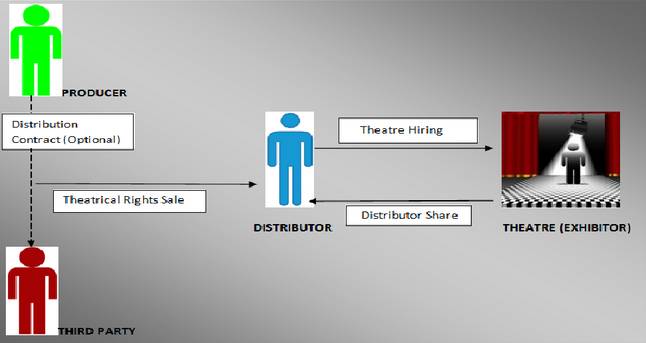
Producer:  The person who invests in films. The money that a Producer invests in making a film is called the “Budget”. It includes everything from remuneration of the actors, technicians and other crew members to transportation and other costs. Apart from this, once a film is complete, it has to be marketed and that calls for “PA (Promotion & Advertisement)” expenses.
Distributor: The Distributor forms the most vital link in this money chain by acting as a medium between Producers and Theatres. The Producer has to deal out their film to the All India Distributors. The price at which the producer sells his film to the distributors is termed as “Theatrical Rights”. The producer can either directly sell the Theatrical Rights to Distributors or make a contract with any Third Party which in turn has the responsibility to deal with Distributors. In that case the Producer will get his share from the third-party even before his film releases and all Profit/Loss will be incurred by third-party only. For example, Yash Raj Films distribute their films themselves, while Nadiadwala Grandson’s had a contract with EROS for Housefull 2. Indian film industry is majorly distributed in 14 circuits and each have its distributors to represent them :- Mumbai, Delhi/UP, East Punjab, CI (Central India), CP Berar (Central Provinces), Rajasthan, Bihar, West Bengal, Nizam, Mysore, Tamil Nadu, Assam, Orissa and Kerala.
Exhibitor (Theatre): In layman terms, Exhibitor is nothing but a theatre owner. The theatres form the end of the box office model. On pre-defined agreements with the exhibitors, the distributors hire their theatres to showcase films. There are two types of theatres in India: (i) Single Screens (ii) Multiplex Chains and both have different kind of agreements with distributors. This agreement focuses mainly on “Number of Screens” and “Monetary Returns” to be paid back by theatres to Distributors. Entertainment Tax (All India average of 30% approx) is deducted from the total collections at the ticket window. This tax is enforced by individual state governments and thus differs from circuit to circuit. After taxes, a percentage of the total nett gross is paid back to the Distributors. This return is known as “Distributor Share”.
Box Office Model
Box Office Terminology:
  • 1) Cost of Film = [Budget + PA (Promotion & Advertisement) Expenses]
  • 2) Non Theatrical Revenues = Satellite Rights + Music Rights + Overseas subsidy etc.
  • 3) Footfalls = Total number of tickets Sold
  • 4) Gross Collections = Total money collected from ticket sales
  • 5) Net Collections = [Gross collections – Entertainment Tax and others]
  • 6) Distributor Share is generally calculated as below:
 Week 1Week 2Week 3Thereafter
Multiplex50%42%37%30%
Single Screens70-90%70-90%70-90%70-90%

This means 50% of the collections (after entertainment taxes) goes to the Distributor in the first week of release and so on.
  • 7) Profit / Loss (Distributor) = [ Amount at which film was bought – Distributor Share ]
Let us now go through a scenario to better understand about these terms.
Case Study – Suppose a film releases with an average ticket price of Rs 120 at Multiplex and Rs 60 at Single Screens in Week 1. 100 people visit a multiplex and single screen each. Entertainment Tax to be deducted from gross collections is same as 30%.
 MultiplexSingle Screen
Footfall100100
Average Ticket Price12060
Gross Collection100 * 120 = 12000100 * 60 = 6000
Entertainment Tax0.3 * 12000 = 36000.3 * 6000 = 1800
Net Collection12000 – 3600 = 84006000 – 1800 = 4200
Distributor ShareFixed 4200(50% — > 0.5 * 8400 = 4200)Between 2940 and 3780(70% — > 0.7 * 4200 = 2940 /90% — > 0.9 * 4200 = 3780)

Highlights
Multiplex v/s Single Screen: It is quite an inevitable fact that Multiplexes have been dominating the box office with every passing year; still the strength of Single Screens can’t be ignored. Single Screens may be termed as the backbone of Distributor Share for the consistent contribution they make and even today, when it comes to making/breaking big records, a film cannot bypass Single Screens.
Hit vs Flop: General norm is that the collection of a film judges how big success it is. But, this is false. In reality it is the Distributor Share which decides a film’s fate because it takes into account both the film’s cost & its box office performance. A film may be called a FLOP fare if it collects 60cr net because of its huge costs to the makers and distributors. On the contrary, another film may turn out to be HIT even if nets 40cr only due to low budget.
Footfalls – An Untold Story: While writing this article, I realized that there is a parameter which is not quite explored/considered in judging box office numbers. And that is Footfalls – i.e the number of people going to watch a film in theatre. One may figure out quickly from above facts that even if more people visit a Single Screen than a Multiplex, Multiplex always has a lead due to high ticket prices.

Wednesday, April 19, 2017

Production Manager- Role & responsibilities in films/ TV

Production Managers are responsible for all the organisational aspects of production scheduling and budgeting. They work across all genres in television production including documentaries, current affairs, light entertainment or children's programmes, situation comedies, soaps or serial dramas, or one off dramas. 

They assist the Producer to interpret and realise the Director’s vision, financially and logistically. They prepare production schedules or script breakdowns to confirm that sufficient time has been allocated for all aspects of the production process, and to check the Producer’s budget and schedule. 

On drama productions they use special software, such as Movie Magic, to provide logistical breakdowns of scripts, detailing all aspects of production requirements, such as: how many and which actors are needed on which days; what locations are required each day; and crewing requirements.

The Production Manager is the key person in the production department. They report directly to Producers. They work closely with all other heads of department to ensure that productions run smoothly, meet deadlines, and stay within budgets. Throughout shooting, they monitor schedules and budgets, and prepare daily report sheets for Producers, detailing all aspects of each day's shoot.

During pre-production and shooting, they deal with any unexpected circumstances and prepare workable alternative plans. They oversee all aspects of the day-to-day running of shoots, from contract preparation to all Health and Safety requirements, and work closely with members of all other production departments, Actors, and other contributors.

On drama productions, they oversee the 1st Assistant Director’s (1st ADs) preparation of daily call sheets for actors and crew members. They must ensure that all cast and crew members' conditions of work are in compliance with the relevant local agreements and regulations.

Sunday, April 9, 2017

Right to Privacy

Right to Privacy

i) The Press shall not intrude or invade the privacy of an individual, unless outweighed by genuine overriding public interest, not being a prurient or morbid curiosity. So, however, that once a matter becomes a matter of public record, the right to privacy no longer subsists and it becomes a legitimate subject for comment by the Press and the media, among others. Special caution is essential in reports likely to stigmatise women.

Explanation: Things concerning a person's home, family, religion, health,
sexuality, personal life and private affairs are covered by the concept of 12
page12image16136 page12image16296 page12image16456

PRIVACY excepting where any of these impinges upon the public or public interest.


ii) Caution against Identification: While reporting crime involving rape, abduction or kidnap of women/females or sexual assault on children, or raising doubts and questions touching the chastity, personal character and privacy of women, the names, photographs of the victims or other particulars leading to their identity shall not be published.

iii) Minor children and infants who are the offspring of sexual abuse or 'forcible marriage' or illicit sexual union shall not be identified or photographed.


iv) Intrusion through photography into moments of personal grief shall be avoided. However, photography of victims of accidents or natural calamity may be in larger public interest.